2.28.2014

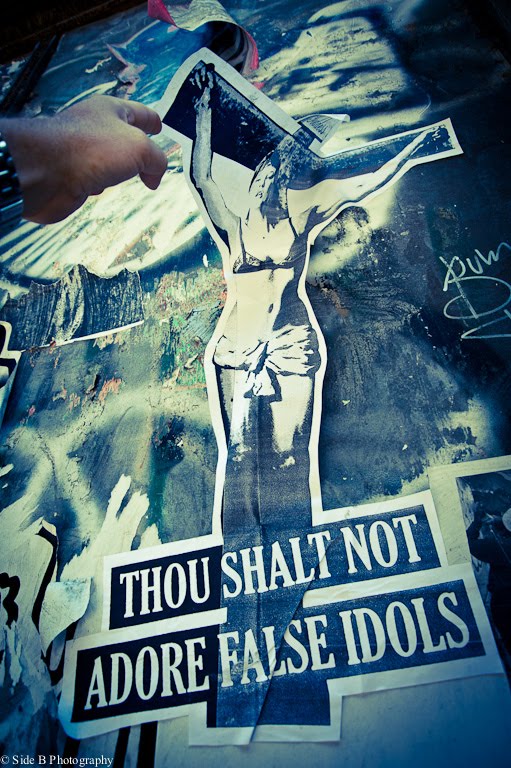
Can art be separated from its creators?

False Idols - 022814

I read a dark humored piece at The Onion concerning the recent trials and tribulations of Woody Allen and the allegations by Mia Farrow's daughter, Dylan about his sexually abusing her as a child*.  In this satirical piece, the Onion makes us confront a difficult question - how do we reconcile our appreciation of Allen's creative greatness and the quandary his alleged actions puts his fans and supporters in? I recently read a piece about a similar conundrum about appreciating the musical production genius of Phil Spector while contending with his sick masochistic nature.  My internal question is, can we still appreciate their art?

There are multiple artists in most genres that have created critically acclaimed art that was tarnished by their actions, behaviors, beliefs, etc. Along with Spector and Allen, Roman Polanski fled to exile to avoid a trial for raping a 13 year old girl.  Polanski also created the masterpiece, Chinatown. I still relish watching that movie, but wonder if I should watch it due to Polanski's history.

Maybe there are two questions.  First, can someone be redeemed by their art?  Second, if they can't be redeemed by it, can we still appreciate it as its own entity while not heaping praise upon its creators?

I believe in redemption, but it comes from actions to mediate and remedy the sins.  The guilty must make amends before redemption.  From what I've seem, none of these accused have taken a step toward redemption through their art.  So, that answers the first question.

Should we separate art from the artists?  When I create art, most of the pieces have no title and at most a brief artist statement on the series.  I don't have a reputation beyond a few friends and fellow artists, so my art is not viewed and commented on as a piece by Karl, but just what the viewer sees, feels, interprets, and comments upon.  I greatly appreciate hearing feedback on my art without my name tinting the view.  When I am the consumer of the art, I enjoy taking it in without being influenced by the artist's legend following it.  By doing that, I can better relate to it and find my own meaning.  Sadly though, when the creator has a big reputation, regardless if it is good or bad, will influence my reception of the art.  Even more sad, I will have to try to account for his/her sins when consuming the art.

So is there any way to view art this way and appreciate it?  I may have found a way by actually bringing the artist into it.  I plan to start looking into the art to see if the artist's sins can be found in their creations.  I am not trying to be an investigator or anything, but trying to understand if some elements of what makes him/her evil lives in the art.  By looking how evil either explicitly or subtly gets into art we may be able to learn where our own sins seep out of us.

* Woody Allen has not been convicted of the allegations brought against him in this post. 

2.12.2014

Personal choices on grooming


Karl - 021314


In my last post, I revisited an old post from my old blog about comments I received concerning a model I photographed and her pubic and underarm hair.  Today, I want to share a bit about my own journey with hair grooming and how society views it and the tough challenges I have had against it.

During my late teens until I started a new job that made it difficult to have, I had a mustache.  I grew it in college so I wouldn't be carded when hitting the bars.  I kept it for twelve years out of the habit and routine of having it.

In 1999, I was thirty and had just started a job in the manufacturing area of a biotech pharmaceutical.  They had no rules against facial hair, but because of having one I had to wear a beard/mustache cover while on the near sterile manufacturing floor for up to 10 hours at a time.  I soon decided to shave it off for comfort.  My wife had not seen me without a mustache and it took her a bit of time to stop staring at my top lip.

For the next 14 years, I happily remained clean shaven (except for a brief experiment with a goatee).  Last fall, we had a Halloween party at work and the theme was TV characters.  With my love for the show, Breaking Bad, I grew a beard and mustache, then trimmed it to match Walter White's menacing facial hair.  While growing it, I started to get some compliments from a number of women and a few men.  After the party, I promptly shaved it all off, with instant regret.  My unique face went back to being unremarkable in anyway.

In December, I started growing it back and am happy I did.  Not everyone shares in those feelings.  Some friends and family tease me (which I do not mind and often laugh with).  One relative said if her dog saw me, she would give me the "DANGER STRANGER" bark.  Other friends teased that I look like Grizzly Adams.  One gay friend said that I became an instant hot straight bear.  Rawr!.

Not all of the receptions of my beard have been so warm.  My dad worries that I don't look professional anymore.  One manager at work (not in my chain of command) asked, "So, are you really thinking of keeping that?"

All of these slights and hardships are a joke, really.  I haven't gone through a the tiniest fraction of what others have had to endure due to race, gender, age, sexual orientation, religion, and many other differences that can not be accepted by other.  My beard is truly a choice, my age isn't.  My gay friends didn't have a choice, nor all of us that are growing older every moment we breath.  So everyone, quit hurting others just because they are older or younger than what you consider the norms, love someone that you can't, or are not of your gender, faith, or race.

PS - I am keeping my Hemingway beard.

PPS - In high school, I went as a "beard" to a spring prom with a friend who is lesbian.  She and I went out of friendship and wanting to ride in a really cool limo.  It is kind of sad I didn't have a romantic date, but it was tragic she couldn't be her true self and go with her girlfriend.

1.22.2014

Hairy issues.

A friend recently mentioned one of my old posts (from an old, extinct blog) that I wrote about criticism I received concerning a model I photographed that had underarm hair.  Below is the image and my original response to the criticism.  I still love photographing models that chose their grooming practice they want, not what is expected of them. 

What the fuck?
Katie - 012314

I just got on my post about working with Katie. Some anonymous cowardly hack wrote:

"She needs to get a razor. Yuck!"

I almost didn't publish it because of how disrespectful it was to Katie. I decided to publish it because this type of ignorance / stupidity / ... grrr. I am running out of adjectives I am so mad. I understand if you have a critique about my photo, (too dark, too light, lousy composition, wrong model for the setting, bad exposure, wrong media, etc.) but what the fuck are you getting at?

Is your view of beauty only limited to women of Maxim and Playboy that do not have an extra hair anywhere and where they have hair, it is in the absolute perfect place?? While I appreciate those types of photos, they are not the only types of beauty in this world. You are missing out on seeing so many beautiful people if you feel this is the only type of beauty.

I think the trend for women to be completely shaven is one of choice. While it is the current trend, I find great beauty in shaven women as well as "natural" women. When did we get so narrow minded?? I am so pissed right now. I am going to go for a walk after posting this.


Followup post

Got Hair??
In continuation to my "What the Fuck?" post yesterday, I am dedicating today's post to women who choose/chose to keep their hair. Somebody wrote a rude comment about a model I photographed that did not shave her armpits or pubic hair. Here are some more photos I am sure commentor will not like, but I find are beautiful.

A friend mentioned a very famous photo of Tina Modotti in her comment. Here is Tina photographed by Edward Weston. Tina was also a great photographer as well as writer, model, actress, activist and role model. She was also very beautiful.
Tina Modotti
Edward Weston
Edward Weston took a number of photos of his wife Charis. This very famous photo has some interesting history because her pubic hair. After the photo below was released, Edward and sons Cole and Brett were nervous about sending prints due to laws concerning obscenity sent through the mail. They took out a magnifying glass and had to see if any pubic hair was showing and if so how much due to the laws. If you look closely, she also has hair on her legs. I am glad Weston captured her beauty in this photo.
Nude, 1936
Edward Weston

So, I tip my hat to everyone who controls their bodies and how they choose to celebrate their beauty. If you are happy shaved, hairy (armpits, pubic, head, anywhere), tattooed, pierced, or any other form of free choice, I support you... and I would really like to photograph you to show how uniquely beautiful YOU are, not what the popular culture thinks is beautiful.


1.07.2014

Good-fucking-bye 2013

Thistle - 010714


For the past three holiday seasons, I've spent them in my new home in Las Vegas.  A few days after the New Year started, I would have to make my nine hour drive back to the Bay Area.  As I drove south on I15, past the M resort, I would look in my rearview mirror and would say goodbye to Las Vegas with a bit of sadness to leave it.  2013 is something that I would have tried to run over if I didn't fear that it would hang on to the bumper and spill over into 2014.  I have never had a year as bad as it.

Since January 1st, I've read many Facebook friends sharing their relief of seeing 2013 pass.  I just read a friend's blog that expressed it as well.  At the water cooler, many coworkers shared the same feelings about it.

There are two parts of my hatred to 2013.  The first is witnessing my aging father in-law and mom both go to the hospital from nasty falls and their health slip.  Both of these well-spoken, brilliant people are shells of their former selves.  It saddens me how something like a fall can so quickly hasten a spiral down that doesn't seem recoverable.  Both are now in assisted care homes.
Jacqui- 010714

The second is of my own creating and living through.  I got myself into a crisis and had to claw my way out of it.  It was my own stupid arrogance and greed that got me there.  Even worse, I hurt others that I care about and lost a good friendship.  It took a many months of therapy and licking my wounds to start to feel human again.  By the end of December, I realized and owned how I ruined and lost a relationship and permanently tarnished the other ones.  I am finally starting to get back into creating art, but it still feels hollow and tarnished as well.

My hatred for 2013 was for witnessing the quick frailty that takes over people at the end of their days and for which I may live to see in my loved ones and die from myself.  I can't control the aging of loved ones, so it is my uselessness that hurts in that case.  My other pain is both self-inflicted and that which I inflicted on others.  This is what I hate most.  I hate that I caused the hurt.  Once again in my life, I have to deal with the fact that I am not the good guy.  I hurt others and was "that guy".  It sucks being the asshole.  I have to keep reminding myself though that as sorry as I feel for myself, I need to make right by the others and not wallow in the self pity.  Guilt hurts, but complaining about it doesn't feel right either.

I know 2014 is not a promise that the future will be sunshine, roses, and all beautiful days.  It will probably hold the last days for some people close to me, my continued stumbling movement toward healing, and other hardships.  On the other hand, I hope that through the wisdom I am gained that I wont be the cause of pain again.


1.02.2014

Fourth time is also a charm.

Candace Nirvana - 010214

Late last month I got the opportunity to create with Candace Nirvana again for the fourth time.  She has moved to the Bay Area and owns/runs the studio, Lighthouse in Berkeley.  On top of setting up many Meetup events with a focus on education and art with nudes, she also is behind the camera creating amazing work much more often.   I am blessed to have her model for me since she is getting very selective of her work in front of the camera.

Candace Nirvana - 010214

I have a number of photos to push through.  You can also see a few more from this shoot at my partnership blog, Shadows Exposed.

Happy New Year everyone.

Candace Nirvana - 010214

PS - Candace is the first nude model that I've worked with four times.  I greatly appreciate her quiet grace and elegance she always shares with me.

12.28.2013

Ageism - scientifically speaking.

You are too old/too young to participate.  Sorry.

Unique Forms of Continuity in Space - Umberto Boccioni - MoMA  - 122813

In my last post a about Santa and Dollars, I wrote about many of the "isms" and the hope that they are fading away.  Friend UL wrote about an often overlooked type of discrimination - ageism.  It made me think upon a recent example of ageism I learned about that is part of science and clinical trials of medications.

As I've mentioned before, I work for a large pharmaceutical company in the pharmacovigilance (PV) department (Drug Safety).  We are the group that makes the list of all those nasty side effects that you hear listed in prescription drug commercials (e.g., dizziness, nausea, oily discharge, liver damage, etc.).  Most of these lists come from what is discovered as side effects during the three phases of clinical trials for the product.  When conducting these clinical trails, especially phase 3, you have to have very tight controls on subject selections so that  the product is being tested against the disease and eliminating outside variables, as much as possible.  To determine who gets the treatments (and depending on the target population of the medicine), you have to create a list of the Special Populations  of those that will be excluded from the study.  For most studies, the first two groups most often listed as special populations are pediatric and older patients.

Scientifically, it can make sense to exclude these two groups.  For too long, children were thought of as little adults when it came to medicine.  You just adjust the dose for the body weight.  This was a big mistake since the metabolism, brains, and organ systems of children are developing and are much different than adults.  In the past few decades, the FDA and other health regulatory agencies (MHRA, EMEA, SFDA, Health Canada, etc.) have increasingly emphasized the need for special clinical trials for children.

The older excluded group is a different issue.  Older humans tend to have multiple issues that can affect/draw questions to the clinical trials.  At 44, I am starting to age out of some studies.  That can be attributed to my needing two different asthma medications along with being on the verge of high blood pressure and cholesterol.  If I start taking meds for those, it would further complicate any clinical trials because of the potential issues of drug interactions and other pre-existing conditions becoming exacerbated.   As we age, we become more medically complex.  All of this can make medical testing very tough and is understandable for filtering out during clinical trials, but on the other hand...

The other hand is that by excluding these special populations, we don't learn what health issues the new product can introduce to the populations.  It may greatly help them, hurt them, or do nothing at all.  The danger can come though when the drug is approved and it gets out to the general population, which includes these special populations.  We often learn more about the side effects of drugs for these groups from reports of adverse events from marketed drugs than those in clinical trials, especially for special populations.  Sadly though, that meant a sick patient had to live (hopefully) through the adverse drug reaction.  Because we didn't test on these subjects, we may not know the issues caused by more-complex health profiles of children and our older communities.

When practicing PV, we don't only list the side effects, we build up a benefit/risk profile for the product.  We want to help the prescribing physicians, patients, and other healthcare providers by giving them the best and most current information on the drug.  This enables them to weigh the benefits and the risks of the product.  Many risks can be reduced or mitigated by taking special actions, so this knowledge is crucial for making the correct treatment plans.  To truly understand this, we must include special populations in the clinical trials and determine how the medicines work within them.  Sadly though, this isn't done, mostly due to the cost and time.

Currently it costs north of a billion dollars, not including production/manufacturing costs, to get a drug approved by regulatory authorities.  With the short trademark life on the product and that it takes 8+years to get approval, doing further clinical trials aren't deemed cost effective or time efficient.  For many products, warnings go out stating that data for special populations is incomplete or missing and that doctors should be very careful prescribing to them or should avoid prescribing them at all.

We (industry, regulatory authorities, insurance companies, advocacy groups, patients, etc.) need to determine a way to require further clinical trials that include special populations to ensure better data across all patient populations and yet makes it financially feasible for the drug companies to do so.  I think all sides need to be flexible and working toward a solution rather than trying to protect only their own interests.

12.20.2013

Santa and dollars. What is real?

If you are under 12... you shouldn't even be reading this blog until you are 18

It happened on Easter Sunday when I was seven.  My family was staying at our Montana cabin out in the woods and my older brother and I were looking for all the goodies that the Easter Bunny had hidden for us.  At one point I had stopped looking and started playing with a toy when my mom said, "I bet the Easter Bunny would hide something behind that chair."  She pointed her finger and I ran off too check it out and found another small toy.  As soon as I picked it up I looked at my mom and the whole belief vaporized into myth.  

"Mom.  You are the Easter Bunny, aren't you?"  I asked with a sudden flush.

Her shoulders dropped and she said, "Yes.  I am."

It all hit me then and I kept asking and she, my brother, and my dad kept replying.

"Tooth fairy?"
"Yes."
With the biggest hesitation, "Santa too?"
"Yes."

She then told me not to tell any of my friends because I shouldn't ruin these things for them. The trip back home that day was quiet.  I had the last of my magical loot in the seat beside me and I felt suddenly much older.  The magic of belief and the belief in magic had evolved into knowing neither magic nor belief existed.  The fences going by and the telephone poles were more real than anything else that day.  

I don't judge the value to perpetuate the myth of Santa and his gift-bearing siblings.  It is up to parents to decide if they want to keep these magical myths going.  I wonder though why we create a *magical belief that is so rooted inside our culture to uphold.  If I say there is no Santa, people shush me and look to see if any kids are around.  It feels like I almost said "fuck and rape" by the responses and dirty looks I get.

Santa is based off of Saint Nicholas of Greece.  Over the years, he has morphed into his current version (and even that is changing with stupid debates over his skin color and his portrayal of obesity) that we perpetuate.  Along with him, the tooth fairy and the Easter Bunny continue to evolve and give better inflation-rated gifts over the years.

So again, why does our culture need these magical beliefs?  Are there other similar beliefs that we hold so true in our hearts, even as adults? 

I started thinking of things that once were not true, but now have become believed as true over the years.  I also started thinking of things that once were beliefs that are now gone or fading away.  Here are some of the first that came to mind.

  • Inferiority in intellect/moral fortitude of a gender, sexual orientation or race.  (Probably everything racist, sexist or homophobic is part of this)
  • Fear mongering of the enemies of a nation over the years - Communists, Soviets, Muslims, etc.
  • The sins of sex
  • Dick Clark never aged.

Along with all of these I came upon the biggest magical belief that almost every country holds.  It is so pervasive that our existence holds its value to be so important that wars, murder, and mayhem go crazy over it to hoard.  It is the dollar, yen, euro, pound.  It is money.

I have an old twenty dollar bill from the 1950's.  On the front it states:
This note is legal tender for all debts, public and private, and is redeemable in lawful money at the United  States Treasury, or at any Federal Reserve Bank.

If you look at one printed now it says.
This note is legal tender for all debts, public and private. 
As many of you know, American money was once based on the Gold Standard in which the paper money was representative of actual gold held in reserve as the backer of value.  At one point though, this was done away with.  That new twenty dollar note is not worth that much because the paper it is printed on is not made of expense materials.  The ink is pretty cheap as well.  It isn't a note that can be directly exchanged for gold stored as proof of value.  That twenty dollar bill is only worth twenty dollars because we have ingrained it into our minds that it is worth it.

If I went to the store today and bought twenty dollars worth of groceries tonight and still had forty left in my wallet and then the zombie apocalypse hit, which could I use to exchange for other goods or services, the left over money or the groceries?  The can of spam would be worth much more than the piece of paper with $20 on it because it truly would have value as a consumable.  In that moment, aside from fighting off zombies, everyone would have the same realization that I had at seven about Santa.  Money isn't real.  Fence posts and telephone poles are real.


I started to see this a few years ago during the recession.  My 401k dropped in value by 75%, as did my home.  One month I had x dollars invested, the next I had 1/4x.  I didn't see any of this stuff happen.  It just disappeared.  On the other hand, my home was still there.  Even though it was worth much less money than it was a year before, I didn't lose an actual 75% chunk of it.  It is still 1410 square feet, two stories high, with a detached garage.  It is the magic-belief-paper-money value of it that was lost.

It is things we truly consume that have value.  Food holds value.  Shelter is valuable.  Medicine is pretty good too.  What about jewelry?  That depends on whether its beauty is valuable or its components hold value for use and in other modes.  What about ideas?  Good ideas are valuable, such as the idea of better way to build a wall to keep zombies out.  That would be worth some spam.  Good music would be valuable as an escape and reprieve from existence, as well as books and other arts.  Friendship, family, and human bonds would be worth much too as our ancestors learned by living in communities.  Of course the value, and trade, of the world's oldest profession will never change.

In this season of giving, stop the craziness of thought that the price tag behind the gift makes it better.  I know it is trite to repeat the cliche of "It isn't the gift, it's the spirit of the gift that counts", but it is true.

I had a coworker look at me, mouth agape, when I told her I was getting my wife a massage and making her dinner for Christmas.  She then stated (semi-joking), "There had better be a Gucci something beside that dinner."  I just smiled and walked away knowing that for us, a relaxed and nurtured body massaged of stress and filled with amazing pot roast is worth more than something sold at Bloomingdales.

*I am not addressing issues of faith and religion with this post.